The Zygote: Totipotency, Embryonic Genome Activation, and Parental Contributions
The formation of a zygote marks the literal beginning of a new, genetically unique individual. But the journey from a single cell to a complex organism relies on fascinating genetic and cellular phenomena, including totipotency and the delicate handover of control from the mother to the embryo.
Totipotency: Infinite Potential
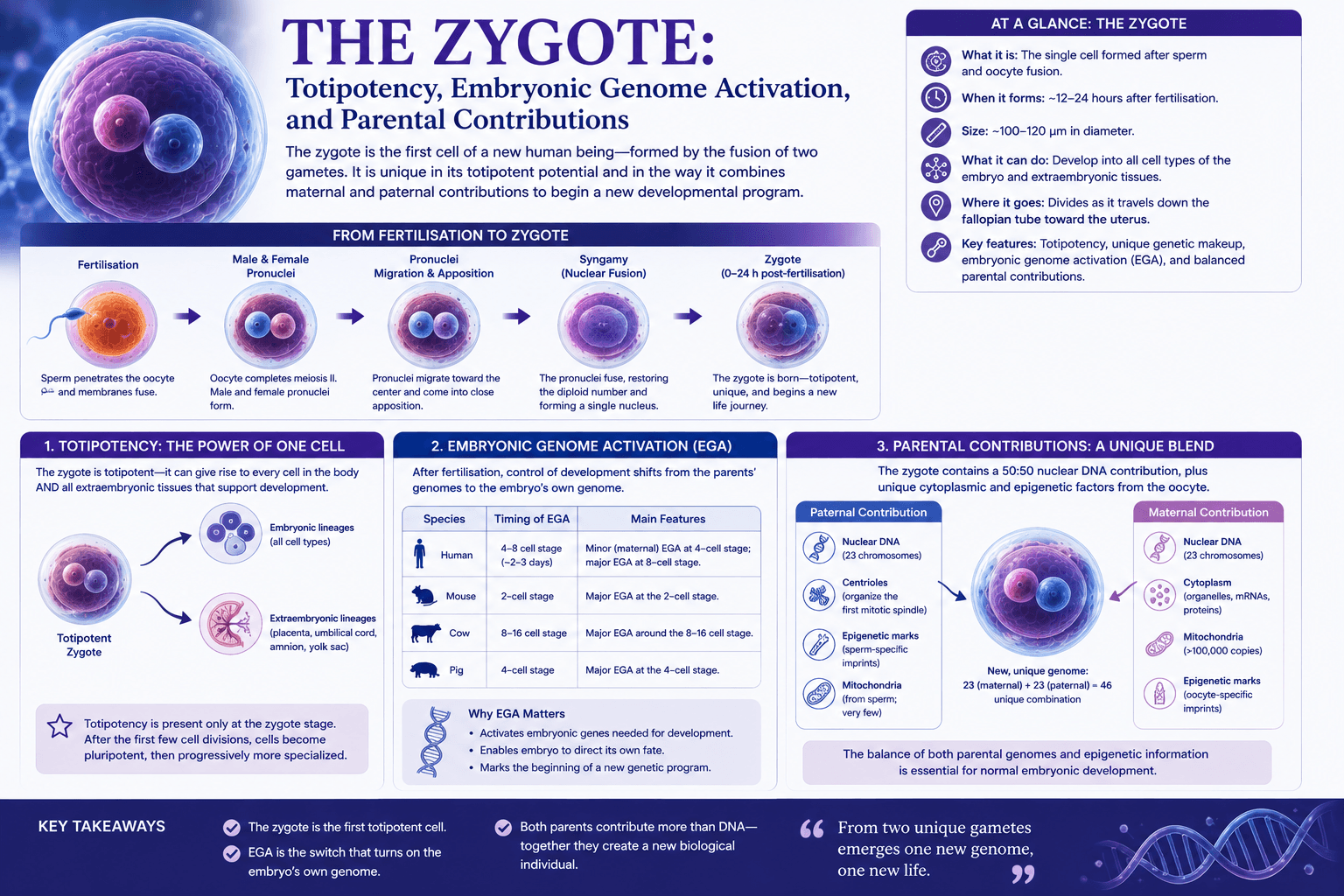
The zygote and the early blastomeres (up to the 4-8 cell stage) are totipotent. This means every single cell has the potential to develop into a complete human being, as well as all the extraembryonic tissues (like the placenta) needed to support it. This incredible cellular plasticity is what allows early embryos to split and form identical twins.
Maternal Control vs. Embryonic Genome Activation (EGA)
For the first few days of life, the embryo is biologically running on "borrowed time." Immediately after fertilization, the zygote is transcriptionally silent. All the proteins and machinery needed for the first few cell divisions are translated from maternal mRNA stored in the oocyte before ovulation.
However, around Day 3 of human development (the 8-cell stage), a critical transition occurs: Embryonic Genome Activation (EGA). The maternal mRNA degrades, and the embryo's newly formed DNA begins to transcribe its own RNA. If the embryo has significant genetic abnormalities, it will often arrest (stop growing) at this specific stage because its own genome is incapable of taking over.
Parental Genome Contributions
While both parents contribute equally to the nuclear DNA of the embryo, their cellular contributions are vastly different. The mother provides the massive oocyte, complete with all the cytoplasm, organelles, and essential mitochondria (meaning all mitochondrial DNA is inherited maternally). The father provides the compacted DNA payload and, crucially, the centriole, which acts as the organizing center for the first mitotic spindles, pulling the newly formed chromosomes apart during the very first cell division.
Content Created By:

RACE Editorial Team
Expert Embryologists