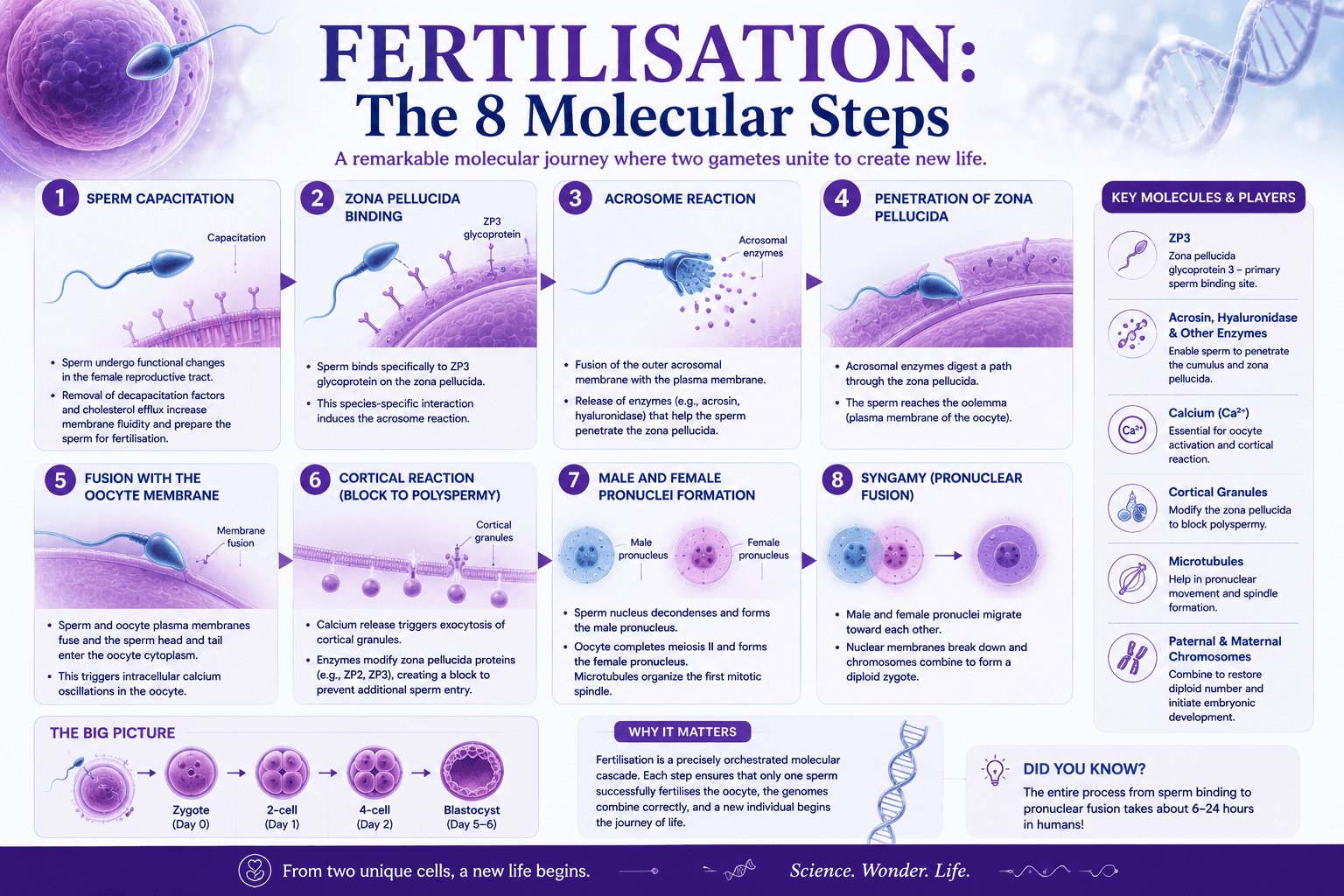
Fertilisation: The 8 Molecular Steps
Fertilisation is not a single event, but a complex, highly orchestrated sequence of molecular interactions. For clinical embryologists, understanding these steps is crucial for diagnosing fertilization failure and successfully performing procedures like conventional IVF.
1. Sperm Capacitation and Hyperactivation
Before a sperm can fertilize an egg, it must undergo physiological changes in the female reproductive tract (or in culture media) that increase its motility and prepare its membrane for the acrosome reaction.
2. Sperm Binding to the Zona Pellucida
The capacitated sperm reaches the oocyte and binds specifically to ZP3 glycoproteins on the zona pellucida, the thick protective layer surrounding the egg.
3. The Acrosome Reaction
Binding triggers the release of proteolytic enzymes from the sperm's acrosome (a cap-like structure on its head), allowing it to digest a path through the zona pellucida.
4. Penetration of the Zona Pellucida
Propelled by hyperactivated motility and enzymatic digestion, the sperm breaches the zona pellucida and reaches the perivitelline space.
5. Fusion of Gamete Membranes
The plasma membranes of the sperm and oocyte fuse. This is a critical step mediated by specific proteins (like Izumo on the sperm and Juno on the oocyte).
6. Oocyte Activation and the Cortical Reaction
Fusion triggers a massive release of intracellular calcium in the oocyte. This causes the release of cortical granules, which alter the zona pellucida to prevent polyspermy (fertilization by more than one sperm).
7. Completion of Meiosis II
The oocyte, previously arrested in Metaphase II, resumes and completes meiosis, extruding the second polar body.
8. Formation of Pronuclei and Syngamy
The sperm and egg DNA decondense to form male and female pronuclei. These migrate toward each other, their membranes dissolve, and the parental genomes merge (syngamy), officially creating a diploid zygote.
Content Created By:

RACE Editorial Team
Expert Embryologists