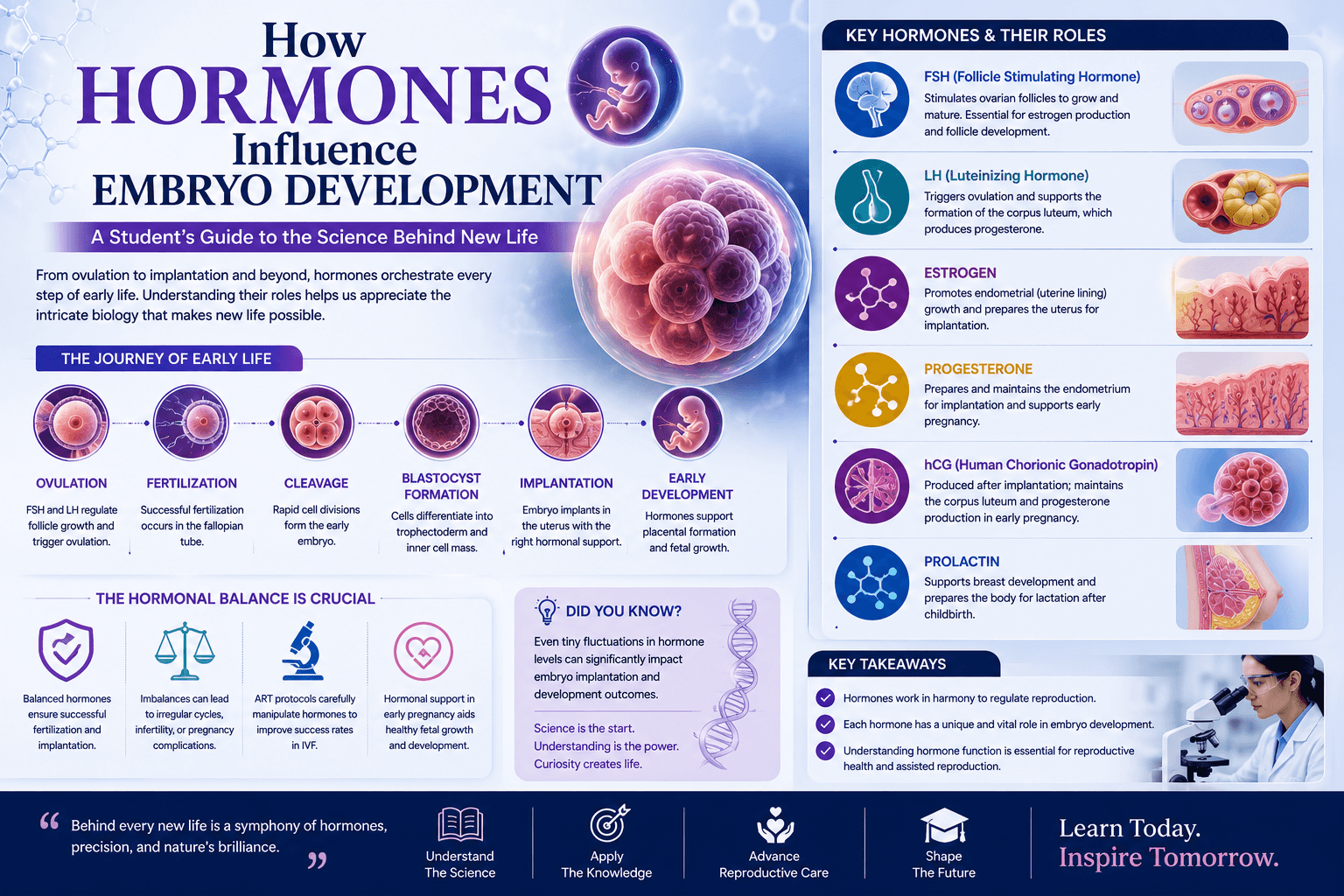
How Hormones Influence Embryo Development: A Student's Guide to the Science Behind New Life
In the intricate world of Assisted Reproductive Technology (ART), the embryo is often the star of the show. However, the supporting cast — a complex symphony of hormones — is what makes the miracle of life possible. For students of embryology, understanding these chemical messengers is not just about passing exams; it’s about mastering the environment that allows an embryo to thrive.
1. Estrogen: The Architect of Receptivity
Estrogen prepares the uterine lining for implantation and regulates the environment of the reproductive tract.
2. Progesterone: The Guardian of Pregnancy
Often called the 'hormone of pregnancy,' progesterone maintains the endometrium and supports early embryo development.
3. FSH and LH: The Drivers of Folliculogenesis
These gonadotropins control the growth and maturation of the follicles that will eventually produce the oocytes.
4. hCG: The Signal of Success
Human Chorionic Gonadotropin is the first chemical signal that an embryo has successfully implanted.
5. GnRH: The Master Regulator
Controls the release of FSH and LH and is central to IVF stimulation protocols.
Conclusion
Hormones are the language of life. By understanding this language, embryologists can better support the embryos in their care and improve the chances of a successful pregnancy.
Content Created By:

RACE Editorial Team
Expert Embryologists