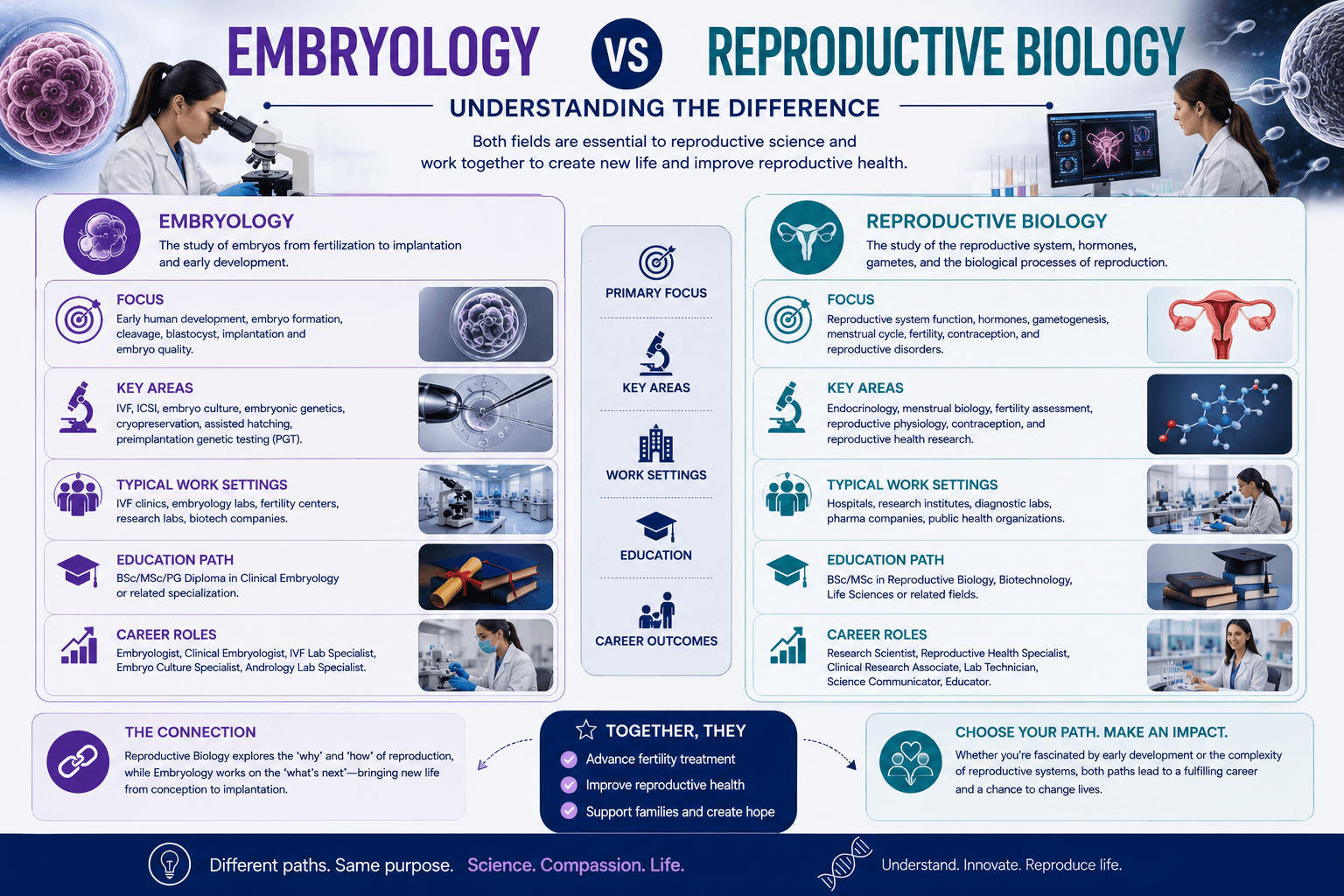
Embryology vs Reproductive Biology: Understanding the Difference
While often used interchangeably by the general public, Embryology and Reproductive Biology are distinct yet deeply interconnected fields. For students and aspiring scientists, understanding this distinction is the first step toward a focused and successful career.
What is Reproductive Biology?
Reproductive biology is the broad study of the reproductive system. It encompasses everything from the molecular mechanisms of hormone regulation to the anatomy of reproductive organs and the overall physiology of human fertility. Reproductive biologists might study topics like PCOS, endometriosis, or the genetic factors influencing sperm production.
What is Clinical Embryology?
Clinical Embryology is a highly specialized branch of reproductive science focused entirely on the gametes (sperm and oocytes) and the embryo outside the human body. Embryologists are the scientists who perform the hands-on laboratory procedures in an IVF clinic. Their work includes semen analysis, oocyte retrieval, In Vitro Fertilization (IVF), Intracytoplasmic Sperm Injection (ICSI), and embryo culture.
The Overlap and the Divergence
A reproductive biologist might discover a new protein essential for fertilization. An embryologist is the one who applies that knowledge to successfully fertilize an egg in a petri dish. While reproductive biology is often research-heavy and broad, clinical embryology is highly applied, procedural, and focused on immediate patient outcomes.
Choosing Your Path
If you are fascinated by the underlying causes of infertility and want to conduct broad research, reproductive biology might be your path. If you want to be directly involved in the creation of life, handling gametes, and working in a fast-paced clinical laboratory, then specialized training in Clinical Embryology is the right choice.
Content Created By:

RACE Editorial Team
Expert Embryologists