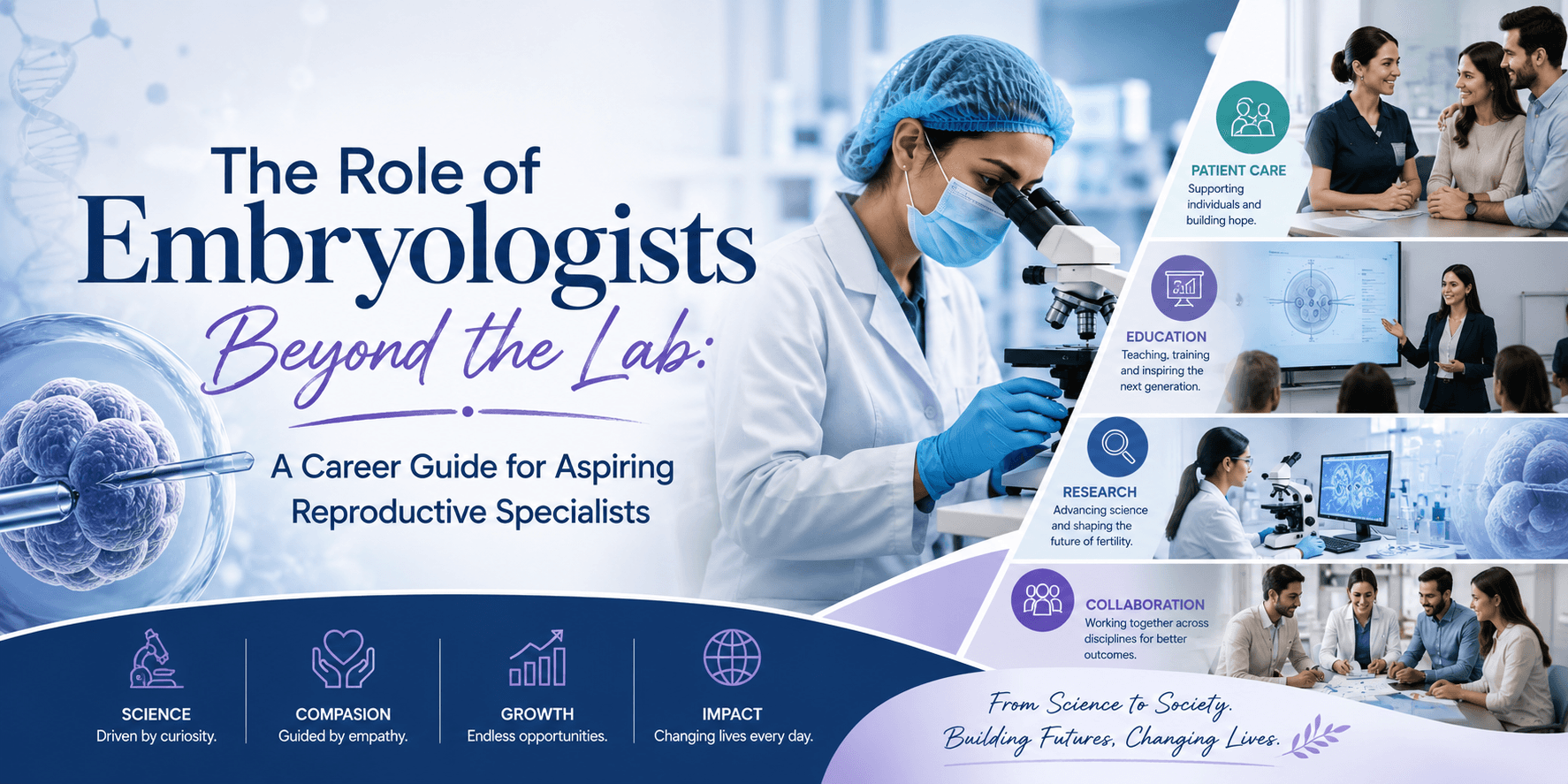
The Role of Embryologists Beyond the Lab: A Career Guide for Aspiring Reproductive Specialists
Expanding Horizons in Clinical Embryology
When most people think of a clinical embryologist, they picture a scientist in a sterile, dark lab, hunched over a micromanipulator, performing ICSI or grading blastocysts. While laboratory work is indeed the heart of the profession, a career in embryology is far more dynamic than many realize. As the global demand for Assisted Reproductive Technology (ART) grows, so too do the career paths available to trained reproductive specialists.
For aspiring and experienced embryologists alike, understanding these diverse paths is the key to building a resilient, long-term career that matches your evolving professional interests. Here is a comprehensive guide to the highly rewarding roles embryologists can pursue beyond the traditional IVF laboratory bench.
1. IVF Lab Director and Operations Management
For senior embryologists with years of hands-on experience, the natural progression is into laboratory leadership. As a Lab Director, you transition from executing procedures to managing the entire laboratory ecosystem. This includes:
- Quality Management Systems (QMS): Implementing rigorous monitoring of temperature, air quality (VOCs), and equipment calibration to maintain high success rates.
- Regulatory Compliance: Ensuring the lab adheres to international standards (like ISO or ESHRE) and local national regulations (such as the Indian ART Act 2021).
- Team Leadership: Hiring, training, and mentoring junior embryologists and technicians.
This role requires a blend of advanced scientific knowledge, meticulous attention to detail, and strong administrative and leadership capabilities.
2. Clinical Research and Academic Leadership
If you have a strong passion for scientific inquiry and discovery, a career in clinical research or academia might be your true calling. Embryologists are uniquely positioned to contribute to breakthroughs in reproductive medicine, such as:
- Evaluating Artificial Intelligence (AI) algorithms for non-invasive embryo selection.
- Investigating the impact of the uterine microbiome on embryo implantation rates.
- Developing new protocols for oocyte vitrification and cryopreservation of ovarian tissue.
Pursuing a PhD or joining a research-focused university allows you to teach the next generation of embryologists while publishing case reports and clinical trials that push the boundaries of reproductive science.
3. Clinical Applications Specialist & Medical Device Industry
The IVF industry relies on highly specialized equipment and consumables—micromanipulators, laser systems, culture media, incubators, and vitrification kits. Companies like Vitrolife, CooperSurgical, and Cook Medical actively recruit clinical embryologists as Product Specialists or Clinical Applications Specialists.
In this role, you bridge the gap between engineering and clinical practice. You travel to IVF clinics, demonstrate how to use new systems, troubleshoot protocol issues, and help launch innovative technologies. It is an excellent career path for those who love travel, networking, and staying at the cutting edge of tech.
4. IVF Training and Embryology Education
As the IVF sector expands, the need for highly skilled, hands-on training centers has skyrocketed. Reputable institutes like RACE (Reprogenesis Academy of Clinical Embryology) require expert faculty to run specialized courses. If you enjoy teaching, mentoring, and guiding others, becoming an embryology educator is incredibly fulfilling. You help shape the skills, ethics, and practices of future professionals who will go on to create new life.
Conclusion: Designing Your Career Trajectory
Whether you choose to remain a master of laboratory micromanipulation, step into administrative leadership, join the biomedical industry, or educate the next generation, a foundation in clinical embryology opens doors to a vast and rewarding professional landscape. By continuous learning, networking, and developing specialized skills, you can build a career that remains intellectually stimulating and highly impactful throughout your life.
Content Created By:

RACE Editorial Team
Expert Embryologists